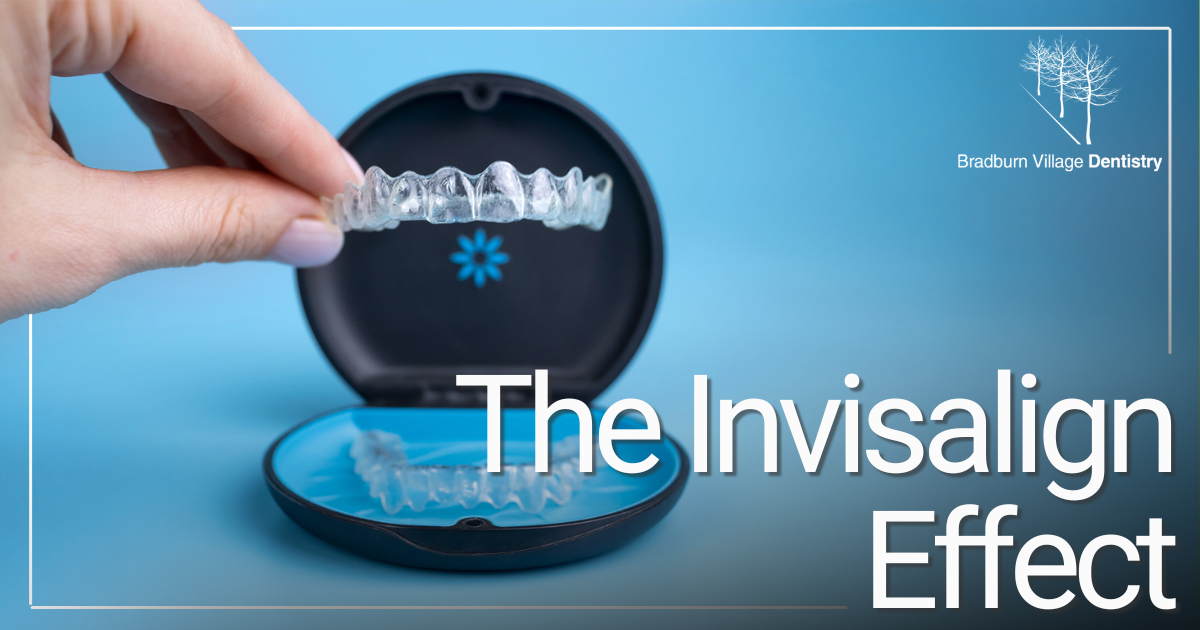
Everyone talks about straighter teeth and more confidence, but there’s another benefit to Invisalign that isn’t visible in before-and-after photos. Invisalign doesn’t just straighten teeth. The process reshapes longtime habits, often before you notice. Read on to learn more.
You’ll See What’s Happening in Your Mouth
Traditional braces run mostly on autopilot. You come in for adjustments, and the hardware does the work between visits. Invisalign is different; you’re handling your aligners every day, tracking wear time, and paying close attention to your teeth in a way you never have before.
That attention pays off. You’ll start catching things you previously ignored: early sensitivity, how certain foods get caught between your teeth, and subtle changes in your bite. The problems aren’t new, but the awareness is, and that awareness is what helps you stay ahead of issues rather than react to them.
Your Relationship With Snacking Will Change
Clear aligners need to be removed before eating or drinking anything other than water. At first, that feels like an inconvenience. Over time, it becomes one of the more valuable parts of treatment, resulting in:
- Less unplanned snacking — removing aligners before eating creates a natural pause, reducing grazing
- Reduced acid exposure — fewer eating occasions throughout the day means tooth enamel gets more recovery time between meals
- More structured eating habits — most patients shift toward eating at mealtimes rather than continuously throughout the day
Your Hygiene Will Improve Without Extra Effort
Putting clear aligners over unbrushed teeth causes odor quickly. You learn this fast, and it changes your behavior almost instantly. Brushing after meals stops being a recommendation and starts being something you just do. Most patients move from brushing twice a day to three or four times a day, not through discipline, but because the alternative is unpleasant.
You’ll Build Consistency That Shows Up Beyond Your Teeth
The 20 to 22 daily hours required for effective treatment mean your day gets organized around a simple, repeatable routine. Remove, eat, brush, replace. It’s not complicated, but it does require showing up for it every single day for months.
Patients who complete treatment often say this was unexpectedly valuable, not just for their teeth, but because they experienced firsthand what sustained daily follow-through actually produces. The smile is the visible result. The discipline that built it tends to stick around.
What You Walk Away With
By the end of treatment, the straightened teeth are obvious. What’s less obvious but equally real: better daily habits, a clearer understanding of your oral health, and a hygiene routine that’s genuinely stronger than when you started.
If you’re considering Invisalign and want more details about how it would work specifically for you, call our office today to schedule a personal consultation and get your questions answered.