Why Do Some People Develop More Tartar Than Others?
Have you ever wondered why some people seem to develop tartar almost as soon as they’ve had their teeth cleaned, while others can go months with relatively little buildup? You might assume it all comes down to how well someone brushes and flosses. While those habits certainly matter, they’re only part of the story.
What’s the Difference Between Plaque and Tartar?
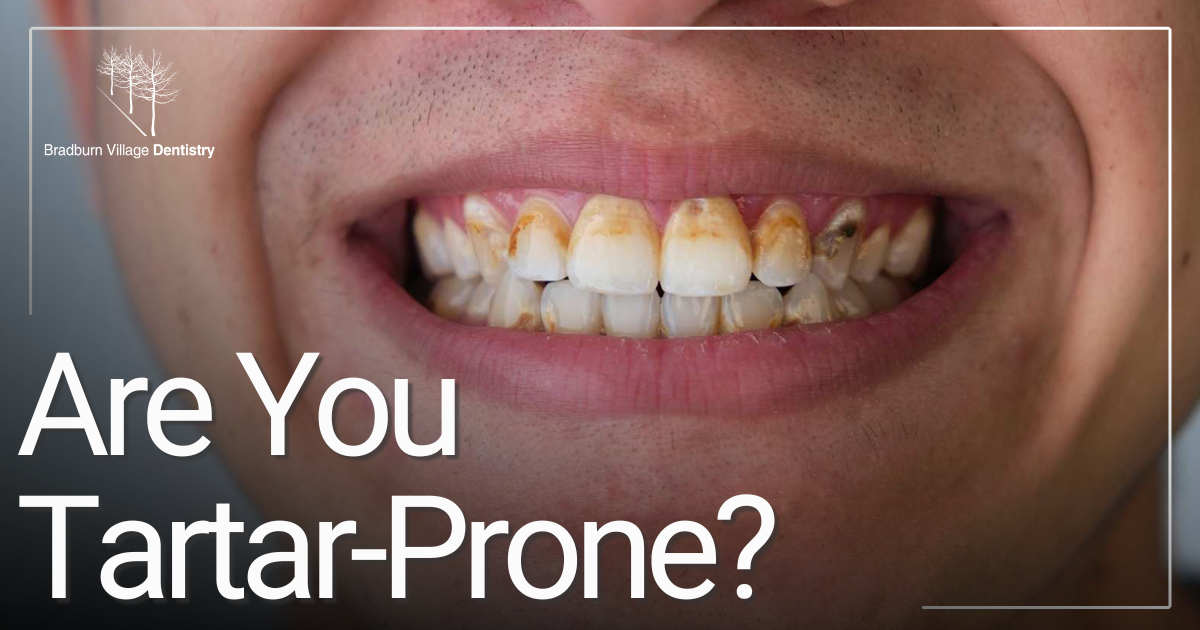
Plaque is the soft, sticky film of bacteria that continually forms on your teeth. Regular brushing and flossing help remove it before it has a chance to cause trouble. When plaque isn’t removed, minerals in your saliva can cause it to harden into tartar, also called calculus. Once that happens, your toothbrush and floss can’t remove it.
Your Saliva Has a Say in the Matter
Saliva is one of your mouth’s natural defenses. It washes away food particles, neutralizes acids, and protects your teeth. Saliva also contains minerals like calcium and phosphate that can contribute to tartar formation when they combine with plaque.
Since saliva composition and flow differ from person to person, some people naturally develop tartar more quickly than others. That doesn’t mean their saliva is unhealthy or that they’re doing something wrong. It’s simply one of the many ways our mouths differ.
Location Matters
Have you noticed that tartar seems to build up more quickly behind your lower front teeth? There’s a reason for that. Several salivary glands release saliva into the mouth near that area, making it a particularly common place for tartar to accumulate. The outer surfaces of your upper back teeth are another frequent trouble spot.
The position of your teeth also makes a difference. Crowded or overlapping teeth may create areas that are harder to reach with a toothbrush or floss, giving plaque more opportunities to remain undisturbed. Sometimes the issue isn’t how often you clean your teeth. It’s how easily you can reach certain surfaces.
Does Home Care Matter?
Even if you’re naturally prone to tartar buildup, your daily habits make an important difference. Brushing thoroughly at least twice a day with fluoride toothpaste, flossing after meals and before bedtime, and paying extra attention to areas where buildup tends to occur will reduce the amount of plaque available to harden into tartar.
If you develop tartar quickly, don’t be discouraged. Maintaining your oral hygiene routine makes a positive difference.
Your Dental Cleanings Are Personal, Too
One benefit of seeing you regularly is that we get to know your mouth’s particular habits. We can identify where tartar tends to accumulate, show you ways to clean those areas more effectively, and determine whether your current professional cleaning schedule is appropriate for your needs.
If you’ve noticed tartar returning quickly after a cleaning, ask us about it at your next appointment. We’re happy to explain what we’re seeing and help you find practical ways to manage buildup. We look forward to seeing you at our office located in Westminster, CO.